Layers that leave room to move
Sleeves, hems, and the practical pleasure of clothes that cooperate.

The success of a layered outfit is often decided at the shoulder. Two sleeves that feel comfortable separately can become difficult together, while a seemingly generous jacket may have less room through the upper arm than you expected. Begin with the places where garments meet. Their cooperation matters as much as the appearance of the finished silhouette.
Lay out the combination you intend to wear, including the outermost layer. Think about the temperatures you expect and which pieces you may remove during the day. A useful arrangement should make sense in more than one state. The clothes underneath deserve the same attention as the coat that frames them.
Test the sleeve relationship
Put the layers on and raise your arms. Reach forward as if carrying a bag or holding a steering wheel. Notice whether the inner sleeve gathers, whether the cuff catches, and whether the outer garment pulls across the back. These ordinary movements reveal space that a still pose can hide.
If the combination feels crowded, change one layer rather than immediately changing size. A different sleeve shape or a smoother inner surface may cooperate more easily with the outer piece. Sizing up can help in some cases, but it also changes the garment's length and overall proportions. Check the whole result before treating it as the answer.
Decide which hem leads
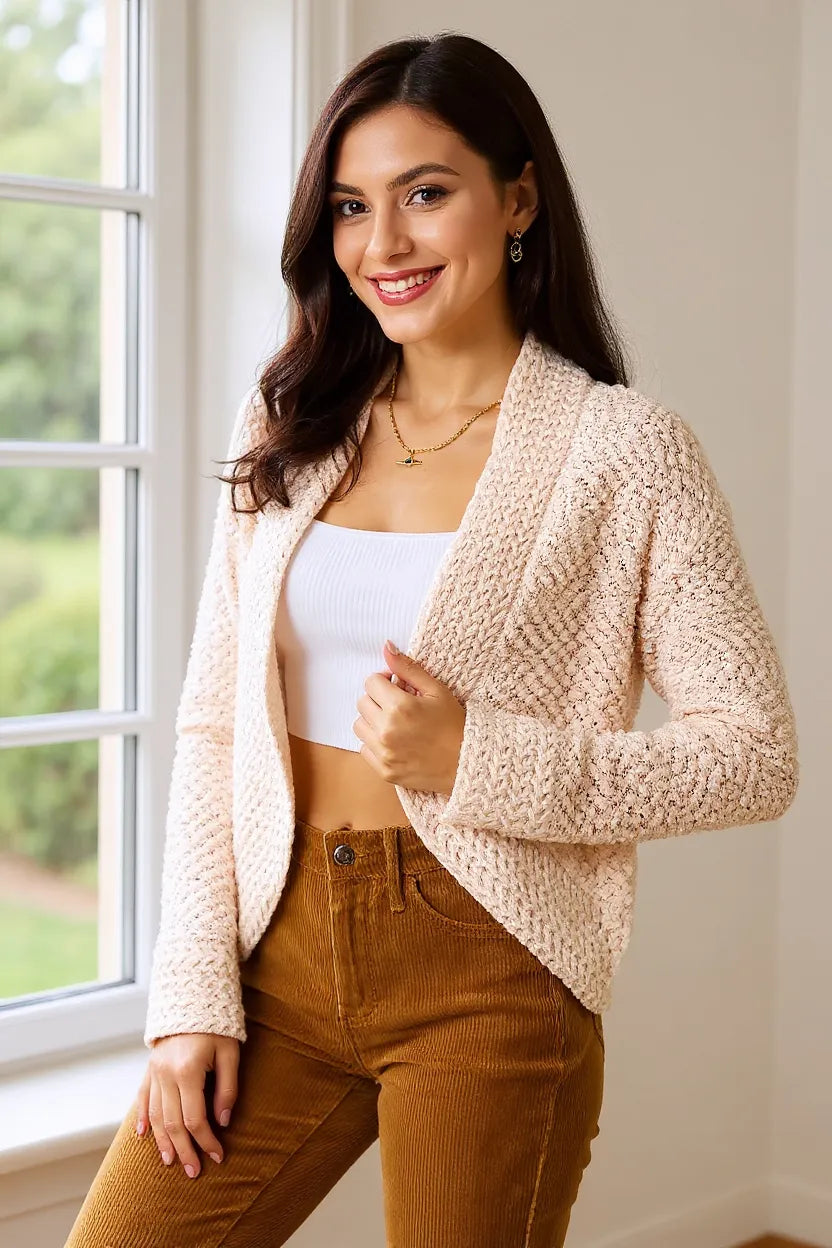
Layered clothes create several visible lines. A shirt can extend below a jacket, a cardigan can frame a shorter top, or two hems can sit close together for a quieter effect. Decide whether you want those lines to separate or merge. This gives the outfit a clear idea even when the shapes are relaxed.
Check the side and back views. A top that appears neatly arranged from the front may bunch where it meets a waistband, while a longer hem can catch on pockets or closures. Walk around and let the clothes settle naturally. The useful version is the one that returns to a comfortable position without repeated adjustment.

Build for changing rooms
If the day includes both outdoor travel and warm interiors, consider the removed layer as part of the plan. Can it fit into your bag? Will it be easy to carry? Does the outfit still provide the coverage and shape you want when that layer comes off? These questions are especially helpful when you are away from home for several hours.
Avoid assuming that more layers automatically solve a temperature problem. The actual fabric, garment weight, construction, and conditions all matter. Use your own experience of the pieces you already own, and read care and composition information when adding something new. Product photographs alone cannot establish warmth or breathability.
Let texture remain legible
Layering can make a restrained palette feel more interesting. A visible knit beside a smooth shirt or a plain outer layer gives the eye different surfaces to read. You do not need every layer to be textured. One distinct surface may provide enough variation for the whole outfit.
Try keeping the colors close while changing the surfaces, then reverse the experiment with simpler textures and a stronger color contrast. This helps you discover which relationship you prefer. If the outfit feels busy, remove a visible line or detail and look again from a distance.
Check the practical edges
Collars, cuffs, drawstrings, and fastenings can all affect how layers sit. Make sure a hood has space inside the outer garment and that buttons do not press uncomfortably beneath another closure. If a cuff is folded, check that it stays secure and does not create a tight band around the forearm.
Take particular care when combining a long inner layer with a shorter outer one. The contrast can be appealing, but the clothes should still allow you to sit and move freely. An intentional line is useful only if it survives the ordinary actions of the day.
Keep a photograph of the combinations that work, including any adjustments you made. A note about sleeve space or hem length can save time later and make future shopping more precise. You will know what a new layer has to accommodate rather than hoping that an appealing image translates into a workable outfit.
Good layering feels considered and easy to inhabit. Its pieces have enough room to do their own jobs, and their visible relationships give the outfit a coherent shape. Start with movement, refine the lines, and let comfort remain part of the design.
Explore the wardrobe
Pieces to explore alongside the story. Stock editorials are separate styling references.
Media credits
Photograph: Leeloo The First / Pexels. Editorial styling reference; garments and fabric pictured are not store products.
Source: https://www.pexels.com/photo/woman-in-all-black-outfit-looking-back-5900575/
Photograph: Leeloo The First / Pexels. Editorial styling reference; garments and fabric pictured are not store products.
Source: https://www.pexels.com/photo/a-woman-in-black-pants-walking-on-the-street-5900417/
Stock license: https://www.pexels.com/license/