Making room for print
Scale, rhythm, and a clear place for the pattern you love.

A printed garment arrives with some of the composition already in place. Its colors, spacing, and scale establish a rhythm before you add anything else. That can make it a helpful starting point on a morning when a wardrobe of plain separates feels strangely difficult. The task is to decide how much of that rhythm you want the rest of the outfit to share.
You can give a print the whole stage or let it appear in smaller intervals. A patterned dress beneath an open jacket offers a different impression from the same dress worn alone. A printed blouse with a quiet trouser may feel quite composed, while a second pattern can introduce deliberate energy. Begin with the version you would actually enjoy wearing.
Read the background first
Look at the ground color behind the pattern. It often provides an easy connection to another garment. A dark background can meet a dark trouser without every flower, stripe, or abstract shape needing an answer elsewhere in the outfit. A pale ground can work with a lighter layer to create a more continuous surface.
This approach is useful when a print contains many colors. You do not have to select an accent from each one. Choose a single relationship that makes sense and let the other colors remain part of the printed garment. The outfit will often feel more resolved when the supporting pieces have a clear, limited job.
Notice the scale
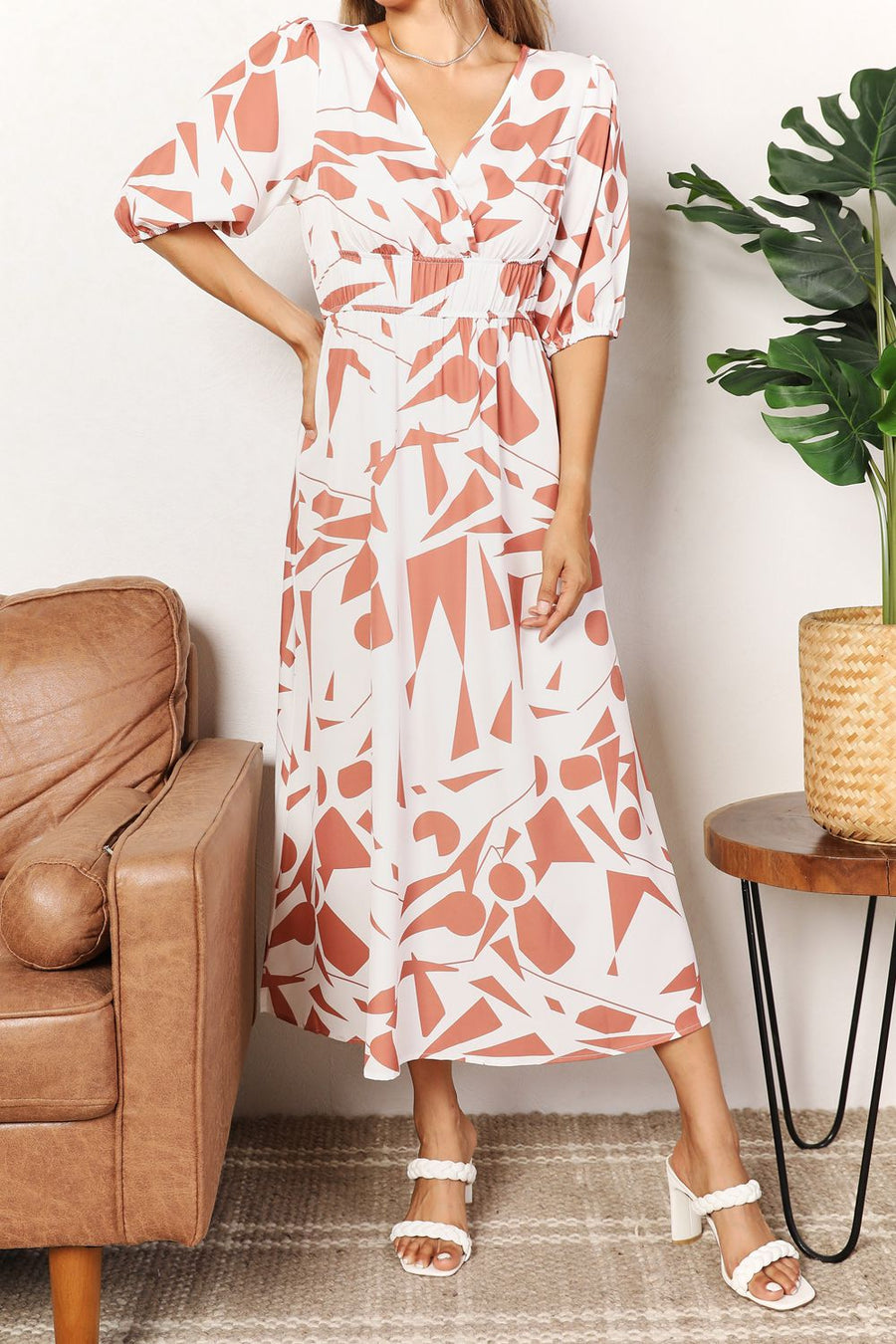
A small, closely spaced pattern can read almost as texture from a distance. A large motif is more likely to create distinct visual moments. Neither scale belongs to a particular body type. The relevant question is the effect you prefer and how the motif sits on the actual cut of the garment.
Check more than the main product image before buying. A print may cross seams, gather at a waist, or change appearance when the fabric moves. Available photographs can help you understand those relationships, though placement may vary between individual pieces. Avoid assuming that a motif will fall in exactly the same place on every size.

Give the neckline some space
When a print feels busy close to the face, try adjusting the layer around it. An open jacket can create a plain boundary. A simple neckline beneath a printed outer layer can provide a pause. These are composition choices rather than rules about who can wear what.
Accessories can follow the same logic. If the printed garment already gives you the amount of detail you enjoy, a simpler bag or shoe may be enough. If you want a more expressive result, choose one additional element and see how it changes the whole. Allow the outfit to remain understandable to you, even when it is deliberately exuberant.
Mix with a point of connection
Two prints can share a color, a direction, or a contrast in scale. A stripe beside a looser floral pattern might work because one feels ordered and the other feels irregular. A repeated dark shade can connect them. Try the combination in daylight and from a distance before deciding whether it feels convincing.
Keep the silhouette familiar while experimenting. If the shapes already work for you, you can concentrate on the patterns. Changing print, proportion, shoes, and layering at once makes it difficult to know which part of the outfit you like or dislike. A stable foundation gives an unfamiliar combination a fair chance.
Let repetition make it ordinary
Expressive clothes often become easier to wear after the first few outings. A printed piece can move from being the special garment you are saving to being a dependable part of an everyday wardrobe. Photograph a combination you enjoy so that it is available again when you need a quick decision.
Consider the practical details alongside the pattern: fabric composition, opacity information, care, measurements, and the type of fastening. A print can attract attention to a garment whose shape or upkeep does not suit you. Check those facts before allowing the photograph to make the entire decision.
The most useful printed piece is one you want to live with. It can be quiet, vivid, regular, or unruly. Give it a clear place in the outfit, let the supporting clothes respond, and leave enough room for your own appetite for detail. Print is an invitation to play with a wardrobe you already understand.
Explore the wardrobe
Pieces to explore alongside the story. Stock editorials are separate styling references.

Media credits
Product photography supplied through Trendsi for Abstract Print Surplice Midi Dress. Consult the product page for the exact garment details.
Source: https://takeflightmerch.com/products/printed-surplice-balloon-sleeve-dress
Photograph: Leeloo The First / Pexels. Editorial styling reference; garments and fabric pictured are not store products.
Source: https://www.pexels.com/photo/a-woman-in-black-pants-walking-on-the-street-5900417/
Stock license: https://www.pexels.com/license/